FREE FOOD SAMPLE ON YOUR FIRST ORDER WHEN YOU SPEND £10+ • FREE DELIVERY OVER £25

For your small whiskered friends - no sugar, no honey, no nasties.
Safe treats for tiny feet
Natural Treats, Forage & Enrichment for Small Pets
Get exclusive offers, new product launches, seasonal treat boxes & small animal care tips
Join the Treats 4 Squeaks Community
Why choose Treats 4 Squeaks?
No added sugar, no honey, natural ingredients, small business, trusted by small animal owners
Discover what our customers think about our service
Sadie - Hamster Owner
Rat girl - Rat Owner
★★★★★
★★★★★
I have supported Treats for Squeaks since the beginning and it is so lovely to see that the company values and customer focus has not changed as they have grown. Really good customer service and beautifully packaged, quality items . Fast turn over time and good communication. It really takes the stress out of finding rat friendly healthy snacks for my ratty boys. A must for rat owners. Highly recommended.
★★★★★
Really friendly personal service. Very fast delivery time with quality products. Absolutely a pleasure to deal with. The Potter Ratty Lads say 'thank you'.
Suzanne - Rat Owner
★★★★★
Everything arrived quickly & was packaged very well with clear labels. Jo reached out to me & was able to custom make my degu treat box as I was already ordering some of the items. Would definitely recommend.
Abe - Degus Owner
Treats 4 Squeaks has an amazing selection! Jo offers all the right stuff to keep my hamster happy and healthy. She makes each order personal by tailoring the treats to my hamsters likes and dislikes. She also offers themed treats which are so great for including the little hamster in yearly occasions/events. Thank you Jo for all the great packages, can’t wait to purchase more.
Customer Links
Delivery prices
Terms & conditions
Privacy policy
Email: info@treats4squeaks.com
Tel: 07353 785 900
© 2024 Treats4Squeaks



Reviews & Trust
Accreditations, Listings & Partners



Review us on Facebook here
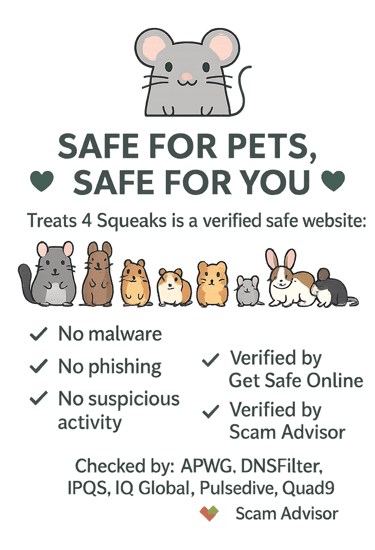
Treats 4 Squeaks | Natural Treats, Forage & Enrichment for Small Animals
Recommended supplier
Looking for additional accessories for your hamster? I recommend my friend at BurrowSwap, who create custom hamster accessories using safe PLA. Their products pair perfectly with our range of hamster treats to help keep your hamster happy and engaged.
Please note that Burrowswap is an independent business, and purchases made through their website are subject to their own terms and policies.